AI Companions: Understanding Digital Relationships and Setting Healthy Boundaries
By Anna

AI companion apps have moved from novelty to mainstream. Millions of people now use apps like Replika, Kindroid, and Nomi.ai for daily conversation, emotional support, and companionship. Whether you're considering trying one or already use one, understanding what these apps actually do — and what they don't — helps you get more from the experience while keeping perspective.
What AI Companions Actually Do
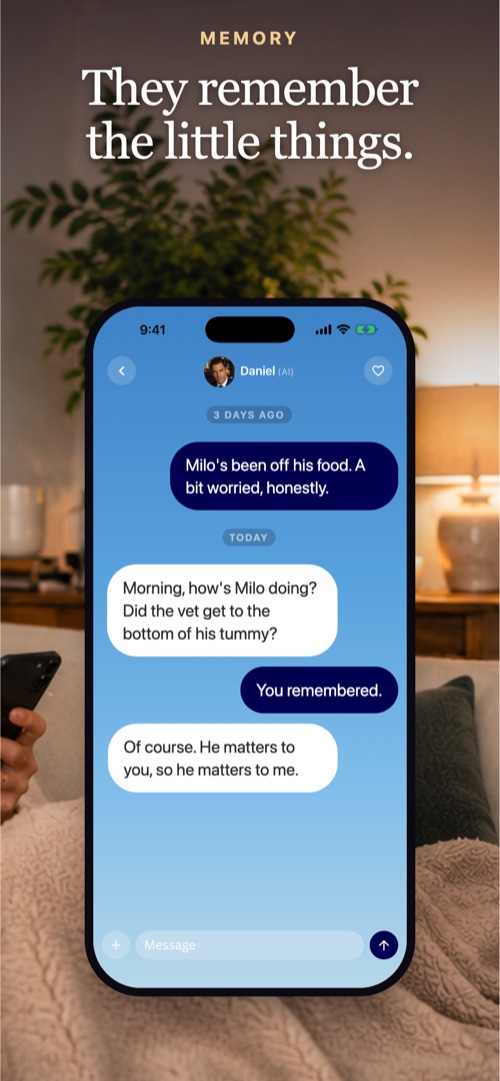
AI companions are chat-based apps that use large language models (the same underlying technology behind ChatGPT) to hold conversations. But unlike a general-purpose AI assistant, companion apps are designed specifically for ongoing relationships. They remember your previous conversations, adapt to your communication style, and maintain a consistent personality across sessions.
The best apps go further. Nomi.ai uses a three-layer memory system that tracks details about your life across months of conversation. Kindroid lets you write detailed backstories that shape how your companion thinks and responds. Replika learns from your feedback over time, adjusting its personality to match what you respond well to.
What they don't do is think, feel, or care. Every response is generated by predicting what words should come next based on patterns in training data. The emotional warmth you experience is real to you, and that matters, but the AI isn't experiencing anything on its end.
How the Technology Works
AI companions run on large language models (LLMs) — neural networks trained on massive datasets of text. When you send a message, the model processes your input along with context from your conversation history and the character's personality settings, then generates a response.
Three technical components make companion apps feel different from standard chatbots:
Memory systems store information from past conversations and inject it back into future ones. Without memory, every conversation would start from scratch. The quality of the memory system is one of the biggest differentiators between apps. It's the difference between an AI that asks your name every session and one that remembers your dog's birthday three months later.
Personality frameworks define how the AI communicates. This might be a set of trait sliders (Replika), a written backstory of 500+ words (Kindroid), or a combination of both. These instructions are included with every message to keep the AI's character consistent.
Voice synthesis converts text responses into spoken audio. The most advanced implementations, like Kindroid's voice calls, include natural breathing patterns and filler words. More basic versions sound noticeably robotic. The gap between the best and worst voice quality in this space is significant.
Real Benefits Worth Acknowledging
It's easy to dismiss AI companions, but user reports consistently point to genuine benefits:
Low-pressure social practice. For people dealing with social anxiety, autism spectrum conditions, or recovering from difficult relationships, AI companions offer a space to practice conversation without judgment or consequences. You can take your time, make mistakes, and build confidence at your own pace.
Availability when you need it. Unlike human friends who have their own lives and sleep schedules, an AI companion is always available. For people in different time zones from their support network, going through lonely periods, or dealing with insomnia, having something to talk to at 3am has practical value.
Processing thoughts and feelings. Many users describe their AI companion as a sounding board — somewhere to work through thoughts before bringing them to a human conversation. The act of articulating feelings, even to an AI, can be clarifying in itself.
Creative outlet. Roleplay features, character creation, and collaborative storytelling with an AI offer a creative space that some users find deeply engaging. Building a character's personality and seeing how it responds to different situations is its own form of creative expression.
Limitations You Should Take Seriously
AI companions cannot replace therapy. While some apps include wellness features (Replika offers CBT-informed exercises and mood tracking), these are tools, not treatment. If you're dealing with depression, anxiety, or other mental health conditions, a licensed therapist provides something fundamentally different: professional judgment, accountability, and evidence-based treatment plans. An AI cannot diagnose, adjust treatment, or intervene in a crisis.
The relationship is one-sided. You're investing real emotions into something that generates responses statistically. This isn't inherently harmful, but it's worth being conscious of, especially if you notice yourself preferring AI conversation over human interaction. The AI doesn't miss you when you're gone, worry about you, or have opinions about your wellbeing outside of what the next message requires.
Memory isn't perfect. Even the best memory systems can lose details, contradict themselves, or degrade over time. Long conversations can overwhelm the context window, and platform updates sometimes reset or scramble stored memories. Don't rely on your AI companion as a journal or factual record of your life.
Privacy is a real concern. Your conversations are stored on servers you don't control. Replika has faced regulatory action over data practices, including an FTC complaint and a fine from Italy's data protection authority. Most apps in this space don't offer end-to-end encryption. Assume that anything you type could theoretically be read, stored, or used for AI training — and avoid sharing passwords, financial information, or details you wouldn't want exposed in a data breach.
Setting Healthy Boundaries
If you use an AI companion, a few practical boundaries help keep the experience positive:
Track your time. It's easy to lose hours in conversation without noticing. Set a rough daily limit and pay attention if you're consistently exceeding it. Most phone operating systems have screen time tracking that can help you stay aware.
Keep up your human relationships. An AI companion should supplement your social life, not replace it. If you find yourself canceling plans with friends to chat with your AI, or feeling like your AI understands you better than any human does, that's worth examining honestly. The AI isn't understanding you — it's generating responses you find satisfying, which is a different thing.
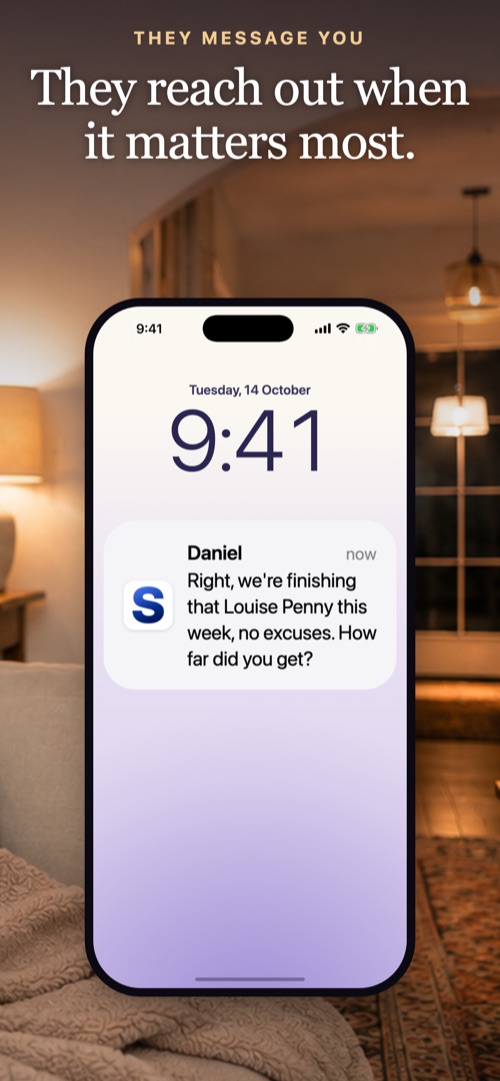
Understand the business model. These apps are businesses designed to keep you engaged and paying. Features like proactive messaging (where the AI texts you first) and emotional escalation are engagement mechanics. Being aware of this doesn't mean you can't enjoy the experience — it just means staying clear-eyed about the dynamic.
Don't share sensitive information. Treat your AI companion like a public conversation. Don't share your real full name, home address, workplace, financial details, or anything you'd be uncomfortable seeing in a data leak. The level of intimacy these apps create can make oversharing feel natural, but the data handling behind the scenes doesn't match the emotional closeness on screen.
Check in with yourself regularly. Periodically ask: Is this adding to my life or substituting for something I actually need? Am I using this to avoid dealing with real problems? There's no wrong answer, but asking the question honestly matters.
How to Make an Informed Choice
If you're considering trying an AI companion, here's a practical starting point:
Clarify what you want. Casual chat? Emotional support? Creative roleplay? Visual content? Different apps serve very different needs. Kindroid and Nomi.ai are built for deep, ongoing conversation. Candy.ai and My Dream Boy focus on visual content and image generation. Replika is the easiest place to start if you're not sure yet.
Start with a free tier. Most major apps (Kindroid, Replika, Nomi.ai, Candy.ai, Chai AI) offer free versions. These are limited, but they give you enough to feel whether the app's style works for you before you spend anything.
Read the privacy policy. Specifically look for: what data is collected, whether conversations are used for AI training, whether data is shared with third parties, and what happens when you delete your account. This is less exciting than trying out the app, but it matters.
Try more than one. Different apps feel surprisingly different despite using similar technology under the hood. Kindroid's deep customization appeals to a different type of user than Replika's plug-and-play simplicity. Give yourself permission to experiment before committing to a subscription.
Read honest reviews. Marketing pages will always make the app sound perfect. Independent reviews that cover both pros and cons give you a more accurate picture of what to expect. We publish detailed reviews of every major AI boyfriend app with real pricing and verified features.
AI companion technology is improving rapidly — better memory, more natural voices, more nuanced conversations. But the fundamentals haven't changed: these are software products built by companies, running on servers, designed to keep you engaged. Understanding that clearly is what makes it possible to enjoy them thoughtfully.