Is Candy AI Safe? Privacy, Content, and What to Watch Out For (2026)
By Anna

Candy AI is one of the most popular AI companion platforms on the market, and one of the most visually advanced. It's also one of the least transparent about what happens to your data once you're inside the app. If you're considering signing up — or you already have — "is it safe?" is the right question to ask, and the honest answer is more complicated than a yes or no.
This guide walks through Candy AI's actual safety profile across four areas that matter: privacy and data handling, content and NSFW moderation, financial safety, and account security. It's based on the platform's public documentation, user reports, and what we know about the broader AI companion industry's track record.
The Short Answer
Candy AI is operationally safe in the sense that there are no documented data breaches affecting it, no regulatory fines, and no major security incidents tied to the platform as of mid-2026. You're not signing up for a known-compromised service.
But it's less transparent than competitors about how your data is handled. The privacy policy is thin compared to apps like Kindroid, there's limited public information about encryption practices, and the platform handles some of the most sensitive content categories in the AI companion space — uncensored NSFW chat, AI-generated intimate images, and HD video. The combination of sensitive content and limited transparency is what should drive your decisions about what to share.
Who Owns Candy AI?
A fair chunk of the "is it safe" question comes down to "is there a real company behind this, and can it be held accountable?" Here Candy AI is on more solid ground than many apps in the category.
Candy.ai is operated by EverAI Limited, a company registered in Malta (registration number C107181), founded in 2023 by Thomas Lacroix. That matters for a few practical reasons:
- It's an identifiable, registered business — not an anonymous operator. Many AI companion apps give you no idea who is actually running them, which makes any privacy promise unenforceable.
- There's a named founder and a company registration you can look up. If something goes wrong, there is a legal entity to complain to or pursue.
- The company runs public support channels — a Zendesk help center and a Discord — rather than hiding behind a contact form.
None of this guarantees good data practices, but an accountable operator is a meaningfully better starting point than the anonymous apps that have been behind the industry's worst breaches.
The Bellingcat Report
One reputational data point worth knowing about: the investigative outlet Bellingcat reported that Candy.ai advertisements had surfaced on MrDeepFakes, a site centered on non-consensual deepfake content. EverAI's response was that this was an affiliate-marketing matter — third-party affiliates placing ads to earn commissions, not the company buying placement there itself.
To be clear about what this is and isn't: it is not evidence that Candy AI's platform was involved in deepfakes (and as covered below, the platform blocks real-person likenesses in image generation). But it's a fair signal about how loosely the company's affiliate marketing was being policed at the time, and it's the kind of thing you deserve to know when deciding whether to trust a platform with intimate content. We'd weigh it as a yellow flag on marketing oversight, not a red flag on the product itself.
Privacy and Data Handling
What Candy AI Collects
Like most AI companion apps, Candy AI collects:
- Account information — email address, payment details if you subscribe
- Chat content — every message you send to your AI companions
- Generated content — images and videos you create through the platform
- Usage data — how often you log in, which features you use, session lengths
- Device information — IP address, browser/device type, approximate location
This is industry-standard for the category. The question isn't what's collected — it's what's done with it afterward.
What's Unclear
Candy AI's public privacy documentation doesn't clearly answer several questions that competitors like Kindroid have addressed publicly:
- Is conversation data used for AI model training? Unclear. Many AI companion apps train on user chats; Candy AI doesn't explicitly confirm or deny this.
- Are conversations end-to-end encrypted? No evidence they are. Assume server-side storage where company staff could technically access data if compelled.
- Is data shared with third parties? The privacy policy allows some sharing for operational purposes (payment processors, analytics) but the scope is loosely defined.
- What's the data retention policy? Not clearly stated. There's no explicit "we delete chat data after X months" commitment.
For a platform handling intimate, often sexual content, this level of opacity is below where we'd want it to be.
Industry Context
Candy AI hasn't had a publicly disclosed breach, but the AI companion industry has had a brutal 18 months. Between January 2025 and April 2026, at least 20 documented incidents have exposed personal data from tens of millions of users across AI-powered apps — including the Chat & Ask AI breach that leaked 300 million messages, and the Chattee Chat / GiMe Chat leak that exposed 43 million messages and 600,000+ user-uploaded images and videos.
Most of these breaches traced back to basic security failures: misconfigured cloud databases, missing authentication, hardcoded API keys. Candy AI may have better practices than the apps that got breached — but without public security documentation, you're trusting that without evidence.
NSFW Content and Moderation
Candy AI markets itself as uncensored, and for paying users it largely is. NSFW chat, AI-generated intimate images, and explicit roleplay are all available to Premium subscribers without the workarounds required on more filtered platforms.
What's Allowed
- Explicit text roleplay with adult companions
- AI-generated NSFW images of adult AI characters
- Live Action video with mature themes
- Voice calls with intimate content
What's Not Allowed (and Where Filters Kick In)
Despite the uncensored positioning, Candy AI does enforce limits:
- Anything involving minors is blocked. Attempts to generate or roleplay underage content are caught and rejected.
- Real-person likenesses are blocked. You can't generate explicit images of celebrities or real people.
- Extreme violence and certain fetish categories are filtered, though the exact list isn't published.
Users sometimes report inconsistent moderation — chats that worked yesterday getting blocked today, or vice versa. The filters appear to be adjusted regularly without public notice.
Why This Matters for Safety
The uncensored content model creates two distinct safety considerations:
- Generated images live on Candy AI's servers. Anything you create — whether you save it locally or not — has been processed and likely stored. If the platform ever suffered a breach similar to what's hit other AI companion apps, your generation history could be exposed.
- The content you generate is tied to your account. Email address, payment details, and prompt history are all in the same system. The MyLovely.AI breach in April 2026 exposed exactly this combination — email addresses linked to user-created prompts and AI-generated images.
This doesn't mean Candy AI will be breached. It means the consequences of one would be more severe than for a text-only platform.
Financial Safety: The Token Economy
This is the area where most Candy AI users actually get burned, and it's worth covering as a safety concern even though it's not what people usually mean by "safe."
The base subscription is $12.99/month, which looks reasonable. But Premium includes only 100 tokens per month, and everything beyond text chat costs tokens:
- Images: 2–4 tokens each ($0.20–$0.40)
- Videos: ~12 tokens (~$1.20)
- Voice calls: 3 tokens per minute ($0.30/min)
Heavy users regularly spend $50–100+/month on top of the subscription. One Trustpilot reviewer reported spending nearly $300 in a single month on tokens. For our full breakdown, see the Candy AI pricing guide.
One genuinely consumer-friendly detail: Candy AI advertises a 7-day free trial with full access on its site. From a financial-safety standpoint, that's the right way to evaluate the platform — you can see how quickly your usage pattern would burn tokens before any real money is on the line. The free tier itself (roughly 10–20 messages, blurred images) is too limited to tell you anything useful about what you'd actually spend.
Practical Financial Safety Tips
- Set a token budget before you start. Decide what you're willing to spend monthly and stick to it.
- Watch for autorenewal. Like most subscription apps, Candy AI autorenews by default. Cancel through your account settings on candy.ai if you're done — there's no App Store subscription to manage, because there's no official app (see below).
- Only pay through candy.ai itself. Since Candy AI has no native app, any "Candy AI" app store purchase is going to an unofficial third party, not to the platform. Subscribe on the official website only.
- Avoid token packs when emotional. The biggest spending traps happen during intense roleplay sessions when buying more tokens feels urgent.
Account Security
Authentication
Candy AI uses standard email and password authentication. There's no public information about two-factor authentication support as of mid-2026 — if 2FA isn't offered, your account is only as secure as your password.
Social Login Risks
Candy AI offers "Sign in with Google" and similar social login options. We'd generally recommend against this for any AI companion app:
- It links your AI companion account to your real identity
- Your Google/Apple account name and email become permanently associated with the service
- If the service is ever breached, that connection is part of what leaks
Use a dedicated email address for signup instead — ideally one you don't use anywhere else.
Payment Data
Candy AI uses standard payment processors. Payment data itself isn't stored on Candy AI's servers — that's handled by the processors, which have their own security standards. This is one area where the platform is on relatively solid ground.
There Is No Official Candy AI App — And That Matters
This is the most concrete, actionable safety point in this guide: Candy AI has no native mobile app. The official platform runs as a Progressive Web App (PWA) — you use it in the browser and can install it to your home screen from there. Candy's own help center lists a native iOS app as planned for late 2026, but as of now it doesn't exist.
Why this is a safety issue rather than just a feature gap: app stores contain multiple apps trading on the Candy AI name from unrelated developers. When we researched our Candy AI review, a Google Play search turned up several "Candy AI" apps — none of them from EverAI, and none of them the real platform. Anything you type into one of those apps — email address, password, payment details, intimate chat content — is going to whoever built the lookalike, not to Candy AI.
The safe rules are simple:
- Access Candy AI only through candy.ai in your browser (or the PWA installed from it).
- Don't download anything from an app store claiming to be Candy AI. Until an official app ships and is linked from candy.ai itself, it isn't official.
- Never reuse your Candy AI password, so that if you have already tried a lookalike app, the damage stops there.
How to Use Candy AI Safely
If you decide to use Candy AI, here's the practical playbook:
Before You Sign Up
- Use a dedicated email address that isn't tied to your real name or main accounts
- Don't use social login — register with email and password instead
- Use a unique password generated by a password manager
- Decide on a token budget for your first month
What Not to Share in Chat
Treat Candy AI like any other AI companion platform — assume conversations could become public. Specifically, never share:
- Your real full name or other identifying details
- Home or work address
- Financial information beyond what's needed for the subscription
- Passwords or account credentials for anything
- Other people's personal information
What Not to Generate
Be thoughtful about what AI images you generate:
- Don't generate images that recognizably depict yourself or real people you know
- Don't upload personal photos for image-to-image generation if the option exists
- Remember that everything you generate is tied to your account and stored server-side
Periodically
- Review what's in your chat history and delete sensitive content you no longer need
- Check Have I Been Pwned for breach notifications on the email you registered with
- Cancel and request data deletion if you're not actively using the service
How Candy AI Compares on Safety
| App | Privacy Transparency | NSFW Risk Level | Documented Issues |
|---|---|---|---|
| Candy AI | Low | High (uncensored) | None public |
| Kindroid | High | Medium | None public |
| Replika | Medium | Low (filtered) | 5M euro GDPR fine, FTC complaint |
| Nomi AI | Medium | Medium | None public |
| My Dream Boy | Low | High (uncensored) | None public |
Kindroid currently has the most transparent privacy documentation in the category. Replika has the worst regulatory track record but stronger content filtering. Candy AI sits in the middle on overall safety — better than the apps that have been breached, worse than the apps that publish detailed privacy practices.
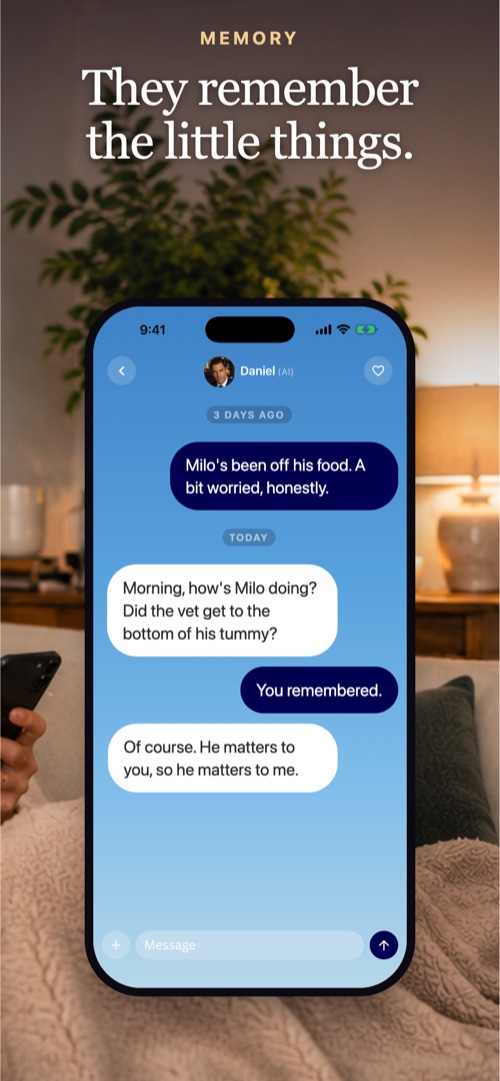
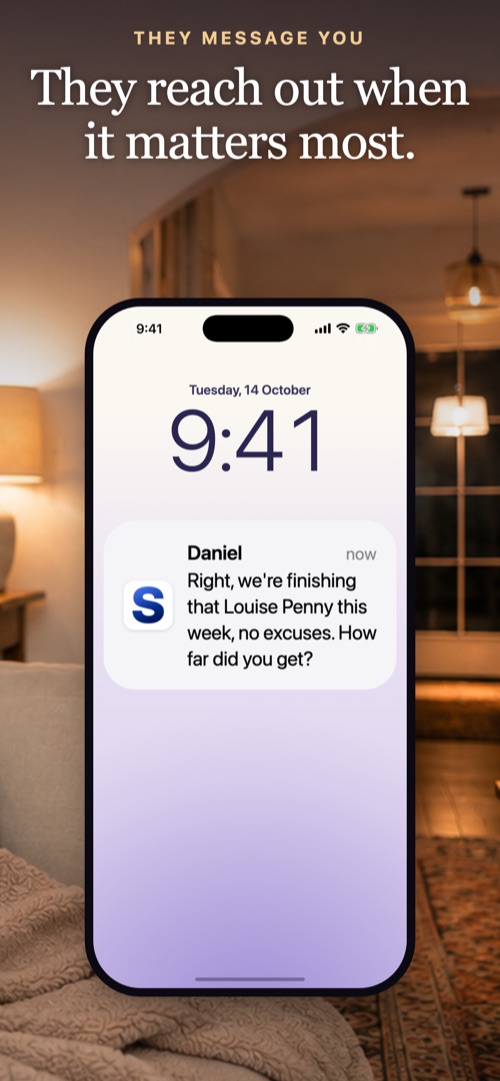
If privacy is the thing that brought you to this page, it's also worth knowing about My Softly, our current #1 pick: a native iPhone app with no explicit content at all, no ads, and a design where photos you send are processed for the conversation and not retained as images. It's a different product than Candy AI — memory and continuity instead of image generation — but if the uncensored-content risk profile is what's making you hesitate, it's the safer lane.
Frequently Asked Questions
Who owns Candy AI?
Candy.ai is operated by EverAI Limited, a company registered in Malta (registration C107181) and founded in 2023 by Thomas Lacroix. That makes it one of the more accountable operators in the AI companion space — there's a real, lookup-able legal entity behind it, which isn't true of many competitors.
Is there an official Candy AI app?
No. Candy AI is web-only — it runs as a Progressive Web App you install from the browser, and there is no official app in the App Store or Google Play (Candy's help center lists a native iOS app as planned for late 2026). Any app currently in a store using the Candy AI name is from an unrelated developer and should not be trusted with your login or payment details.
Has Candy AI ever been hacked?
There are no publicly documented data breaches affecting Candy AI as of mid-2026. That's genuinely worth something given how many AI companion apps have been breached in the same period — but with no public security documentation and no end-to-end encryption, it should be read as "no known incidents," not as proof your data is safe.
Does Candy AI have a free trial?
Yes — the site advertises a 7-day free trial with full access, which is the safest way to evaluate the platform before spending anything. The regular free tier is more of a demo (limited messages, blurred images), and the real financial risk is the token system: images, videos, and calls all cost tokens beyond the $12.99/month subscription. See our pricing guide for the full math.
The Bottom Line
Candy AI is safe enough for most people to use if you treat it the way you should treat any AI companion app: with realistic expectations about privacy and clear personal boundaries about what you share. There's no smoking gun, no known breach, no regulatory action.
But it's not safe in the way that, say, a properly encrypted messaging app is safe. The privacy documentation is thinner than competitors', the content you generate is sensitive, and the broader AI companion industry has a poor security track record. If your threat model involves anyone — an employer, family member, government — discovering that you use the platform or seeing what you've generated, Candy AI isn't built for that level of protection. One way to shrink that risk to near zero is to sidestep explicit content altogether: a strictly SFW companion app like My Softly means there's no NSFW chat or image history to leak in the first place.
For most users, the right approach is: use a dedicated email, never share identifying details, generate carefully, and budget your tokens. That makes Candy AI as safe as any uncensored AI companion platform is going to get in 2026.
For a deeper look at AI companion privacy practices across the category, see our full safety guide. For the complete Candy AI breakdown, see our full review, or weigh up other options in our Candy AI alternatives guide.