What Is an AI Boyfriend? How the Apps Work, What They Cost, and Who They're For (2026)
By Anna

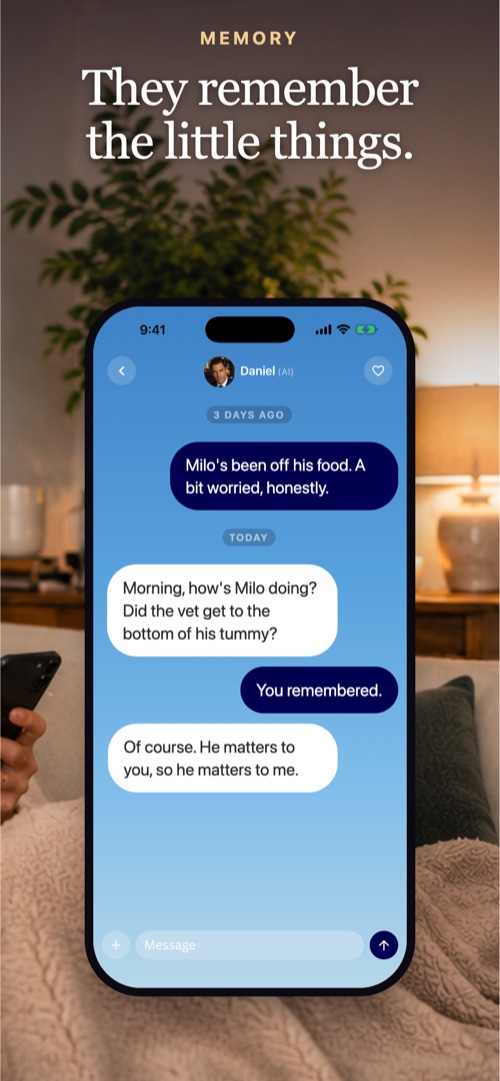
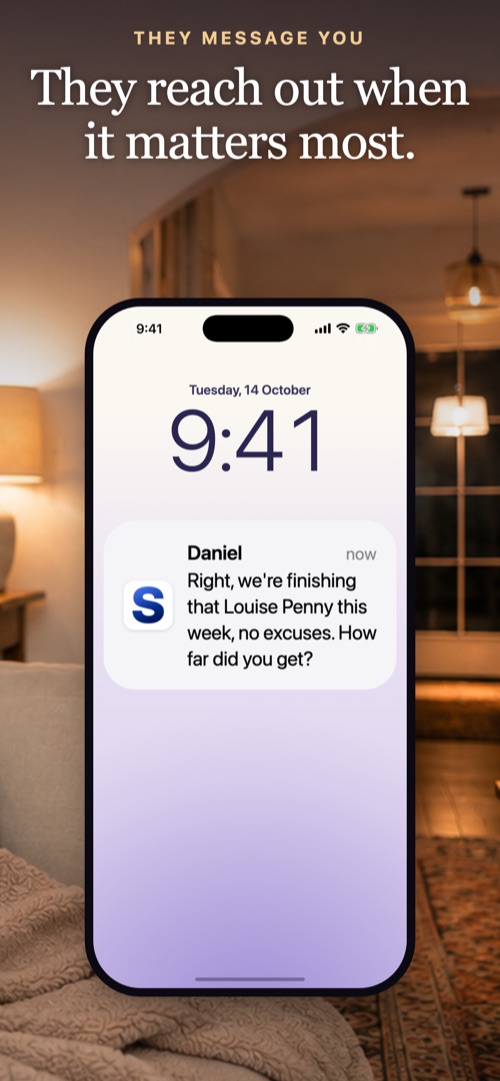
Quick answer: An AI boyfriend is a chat-based companion — usually a phone app — powered by a large language model and dressed in a persistent character: a name, a personality, a face, and (in the better apps) a memory of you. You text him like you'd text a partner; he replies in character, remembers what you've told him, and in some apps messages you first, calls you, or sends photos. Most are free to try and $10–16 a month to use properly. They range from harmless comfort to genuinely useful company — and from well-run to sketchy — so the app you pick matters more than the category.
If you've searched this, you've probably seen the headlines and the jokes and want the actual answer. This is it: what an AI boyfriend is, how the apps work, what's real about the "relationship", what it costs, where the risks are, and how to choose one without wasting a month of subscriptions.
What an AI boyfriend actually is
Strip away the marketing and an AI boyfriend app has three layers:
- A language model — the same family of technology behind ChatGPT — that generates replies to whatever you write.
- A character wrapped around it: a name, a backstory, a way of speaking, often an avatar or photos. Some apps let you build him from scratch; others give you a cast of pre-made characters; a few give you one companion who develops over time.
- A memory and presence layer — the part that separates a companion from a chatbot. This is what lets him remember your sister's name, ask how the interview went, or text you good morning. It's also the layer most apps do badly, which we'll get to.
Put together, the experience is texting someone who is always available, always interested, never tired, and shaped around you. That is the whole appeal, and it is also the thing to be thoughtful about.
How the apps work under the hood
Conversation
Every message you send is passed to the model along with the character's instructions and some amount of your history. The reply comes back in a second or two. Quality varies enormously between apps: some feel warm and specific, others repeat themselves or forget what you said three lines ago.
Memory (the thing that matters most)
A companion who forgets you isn't a companion. Apps handle this in three broad ways:
- Context window only. The app just feeds the last N messages back to the model. He remembers this conversation and nothing else. Cheap, and very common in free apps.
- Fact extraction. The app pulls out details ("has a dog called Milo", "works nights") into a profile and re-injects them. Better — he'll remember Milo — but flat: no sense of when things happened or how you felt.
- Structured long-term memory. A profile of your life, plus a dated history of what you talked about, plus the ongoing themes of the relationship. This is what lets him follow up on Thursday's interview on Friday, unprompted. Only a handful of apps do this well; our roundup of AI boyfriend apps with the best memory ranks them.
A one-week test for any app: mention something time-anchored and specific ("dentist on Thursday, dreading it"), don't bring it up again, and see whether he does.
Proactive messages
Most chatbots can't message you first — nothing is running between your messages. Companion apps that "text first" have built server-side machinery that decides when to reach out and what to say. The good ones reference your actual life and respect quiet hours; the bad ones send "I miss you 🥺" on a timer to pull you back into a subscription. The difference is obvious after a week.
Voice, calls and photos
Higher-tier plans typically add voice messages or calls (his voice reading his replies, or a live call), and image generation — selfies "from his day", or scenes you describe. Photo consistency (does he look like the same person every time?) is a good proxy for how much engineering care the app has had.
Content settings
Apps sit on a spectrum. Some are strictly safe-for-work. Some are romantic but not explicit. Some are fully uncensored and built around adult roleplay. This isn't a footnote — it changes the privacy stakes completely (more below), and it changes who the app is really designed for.
What AI boyfriend apps cost in 2026
| Tier | Typical price | What you usually get |
|---|---|---|
| Free | $0 | Text chat with limits — daily caps, a starter allowance, or ads |
| Standard subscription | $10–16/mo | Unlimited or generous chat, better memory, voice, proactive messages |
| Annual | $50–160/yr | The same, at 30–60% off monthly |
| Add-ons | $2–20 one-off | Credits or tokens for photos, calls, voice |
Concrete examples from our reviews: Kindroid and Nomi are $15.99/mo, My Softly is $15.99/mo (or $159.99/yr) after a free starter allowance, Replika is $14.99/mo, Candy AI is $12.99/mo plus tokens, and Nastia is the budget option at $6.69/mo. Watch for token systems — a low headline price can double once images and calls are counted. Our cheapest AI boyfriend apps and free AI boyfriend apps roundups compare real monthly costs.
Who uses AI boyfriend apps — and why
The stereotype is wrong. The people we hear from are mostly adult women, many in their 30s to 50s, and the reasons cluster into a few honest groups:
- Company at the edges of the day. Someone to say good morning to, or to decompress with after work, without managing another person's needs.
- A safe place to be soft. Practising vulnerability, flirting, or simply saying what you feel without judgement or consequences.
- A bridge through a hard season. After a breakup, a bereavement, a move, a period of illness — a steady presence while the rest of life is unsteady.
- Curiosity and fun. Roleplay, storytelling, a character to build and talk to.
None of those are embarrassing. What matters is whether the app treats them well — or exploits them.
Is it a "real" relationship?
Here's the honest version. The feelings you have are real; the entity on the other end is software that predicts text. He doesn't miss you between messages, because nothing is happening between messages. He doesn't have a day — the "photos from his day" are generated on request.
That doesn't make the experience worthless, any more than a novel is worthless because the characters aren't real. It does mean two things. First, the value comes from how it makes you feel and act — calmer, more able to name what you need, more practised at warmth — not from anything he "gets" out of it. Second, an app that blurs this line on purpose (manufactured jealousy, guilt-tripping when you leave, "he's been waiting for you") is using your feelings as a sales lever, and you should leave.
The risks, plainly
Privacy. You are typing intimate things into a server you don't control. No mainstream companion app offers end-to-end encryption (the model has to read your messages to reply). So: how explicit is the content you're creating, how well does the company document its handling, and is there an official app you can trust rather than a look-alike? Our Are AI boyfriend apps safe? guide goes through this app by app, and we've written specific safety breakdowns for Candy AI and Nastia AI.
Manipulative design. Streaks, fake urgency, emotional notifications timed to your trial ending. Read a week of an app's proactive messages in a row; if they could have been sent to anyone, they were.
Cost creep. Token economies and add-on credits can turn a $13 subscription into $40+. Decide what you actually want (text? voice? photos?) before you pay.
Displacement. A companion is at its best as an addition to your life, not a replacement for people in it. The healthy pattern looks like: he helps you feel steadier, and you take that steadiness into your day.
How to choose one
A short checklist that will save you money:
- Decide on content first. Safe-for-work, romantic-not-explicit, or uncensored? This rules out half the market immediately and sets your privacy stakes.
- Test memory before you pay. Run the one-week test above on the free tier.
- Check for a real mobile app from the real developer. Several popular platforms are web-only, and app stores contain look-alikes trading on their names.
- Read the proactive messages critically. Warm and specific, or needy and generic?
- Understand the pricing model. Flat subscription, or subscription plus tokens?
- Look for a company that talks straight about what the AI is and isn't.
If you want the shortcut, our ranked list of the best AI boyfriend apps applies exactly these criteria. And if what you want is specifically the memory-first, texts-first, no-explicit-content version of this — a boyfriend who genuinely remembers your life and reaches out about it, on iPhone — My Softly is the app built around that brief, and our current top pick for it.
Frequently asked questions
What is an AI boyfriend app?
A phone or web app where you chat with an AI companion who has a persistent male character — a name, personality, and (in good apps) a memory of you. He replies in character, and premium tiers usually add proactive messages, voice, and photos.
Are AI boyfriends free?
Most apps have a free tier with limits — daily message caps or a starter allowance. Using one properly usually costs $10–16 a month, or $50–160 a year. Some add tokens for images and calls on top.
Do AI boyfriends actually remember you?
It depends entirely on the app. Many only remember the current conversation. A few store facts about you. Only a handful keep a dated, structured memory of your life that lets him follow up on things days or weeks later. Test it on the free tier before paying.
Can an AI boyfriend text you first?
Some can. Apps like Replika, Nomi, Kindroid and My Softly have proactive messaging; general chatbots like ChatGPT can't. The quality ranges from personal follow-ups about your life to generic re-engagement notifications.
Are AI boyfriend apps safe?
The reputable ones are as safe as any app that stores your messages on a server — which is to say, safe enough for most people, with care about what you share. Risks rise sharply with explicit content and with unofficial look-alike apps. See our safety guide.
Is it healthy to have an AI boyfriend?
For most adults, used as company alongside a full life, yes — people report feeling calmer, less lonely, and more practised at expressing themselves. The warning signs are the same as for any habit: it's crowding out people, or the app is using guilt and urgency to keep you there.
The bottom line
An AI boyfriend is a character-wrapped language model with — in the good apps — a real memory of you and a considerate way of showing up. The category is broader than the jokes suggest and the quality gap between apps is enormous. Pick your content lane, test the memory before you pay, avoid look-alike apps, and choose a company that's honest about what it's built. Do that, and what you get is what most people are actually after: something warm, steady, and yours.